

todayonchain.com

Hyperliquid traders in Tokyo get 200-millisecond edge, Glassnode research shows
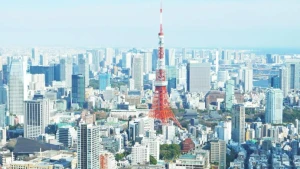
CoinDesk

Glassnode research reveals Tokyo-based Hyperliquid traders gain a 200-millisecond latency advantage due to validator clustering in AWS Tokyo.

Summary

Research by Glassnode indicates that Hyperliquid, despite being decentralized, exhibits significant latency advantages for traders geographically close to its infrastructure, specifically those in Tokyo. Hyperliquid's 24 validators are clustered in AWS's ap-northeast-1 region in Tokyo, allowing trades from nearby users to reach the protocol in as little as 2 to 3 milliseconds, compared to over 200 milliseconds for European users. This geographic clustering creates an execution asymmetry where Tokyo traders can secure better positions and fill probabilities, translating to an edge of about 200 milliseconds on a one-second fill for orders. This highlights a tension between decentralization and equal participation, as geography dictates queue priority in this time-ordered system. Tokyo has become a hub for crypto infrastructure, hosting deployments for centralized exchanges like Binance and KuCoin, drawn by Asian trading flow and Japan's regulatory framework. Unlike traditional finance, where exchanges actively neutralize geographic advantages through measures like equalizing cable lengths, no such safeguards exist in decentralized markets, suggesting the latency arms race seen on Wall Street is now entering DeFi, centered around Tokyo.

(Source:CoinDesk)