

Are Bitcoin miners becoming AI utilities? The math says yes
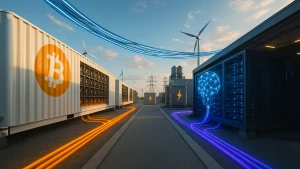
 Following the halving, Bitcoin miners are increasingly leasing infrastructure to AI tenants because dollar-denominated hosting contracts offer better margins than volatile hash price revenue.
Summary
The Bitcoin halving, which cut block rewards, compressed the hash price and forced miners to seek alternative revenue streams, leading major operators like Core Scientific and Cipher to sign massive deals leasing infrastructure to AI compute providers.
These deals are mathematically favorable because AI colocation offers contracted, dollar-denominated revenue per kilowatt-month, which provides margin stability compared to mining revenue tied to volatile BTC price and hash price. Miners possess the necessary assets—cheap power, industrial sites, and cooling expertise—that AI compute requires. While mining at a hash price of $75 per petahash yields a tight cash margin of about $129 per MWh, AI hosting can generate higher facility revenue intensity ($139 to $208 per MWh) with power costs passed to the tenant, shifting commodity risk.
The shift impacts the network: if hash rate migrates significantly, network difficulty will drop, increasing the hash price for remaining miners, creating a trade-off between Bitcoin exposure and cash flow certainty. Miners are hedging by balancing both activities, but the long-term strategic question is whether the industry remains single-use or evolves into a multi-tenant power monetization layer that secures the blockchain.
(Source:CryptoSlate)